
Virtual Reality and Augmented Reality
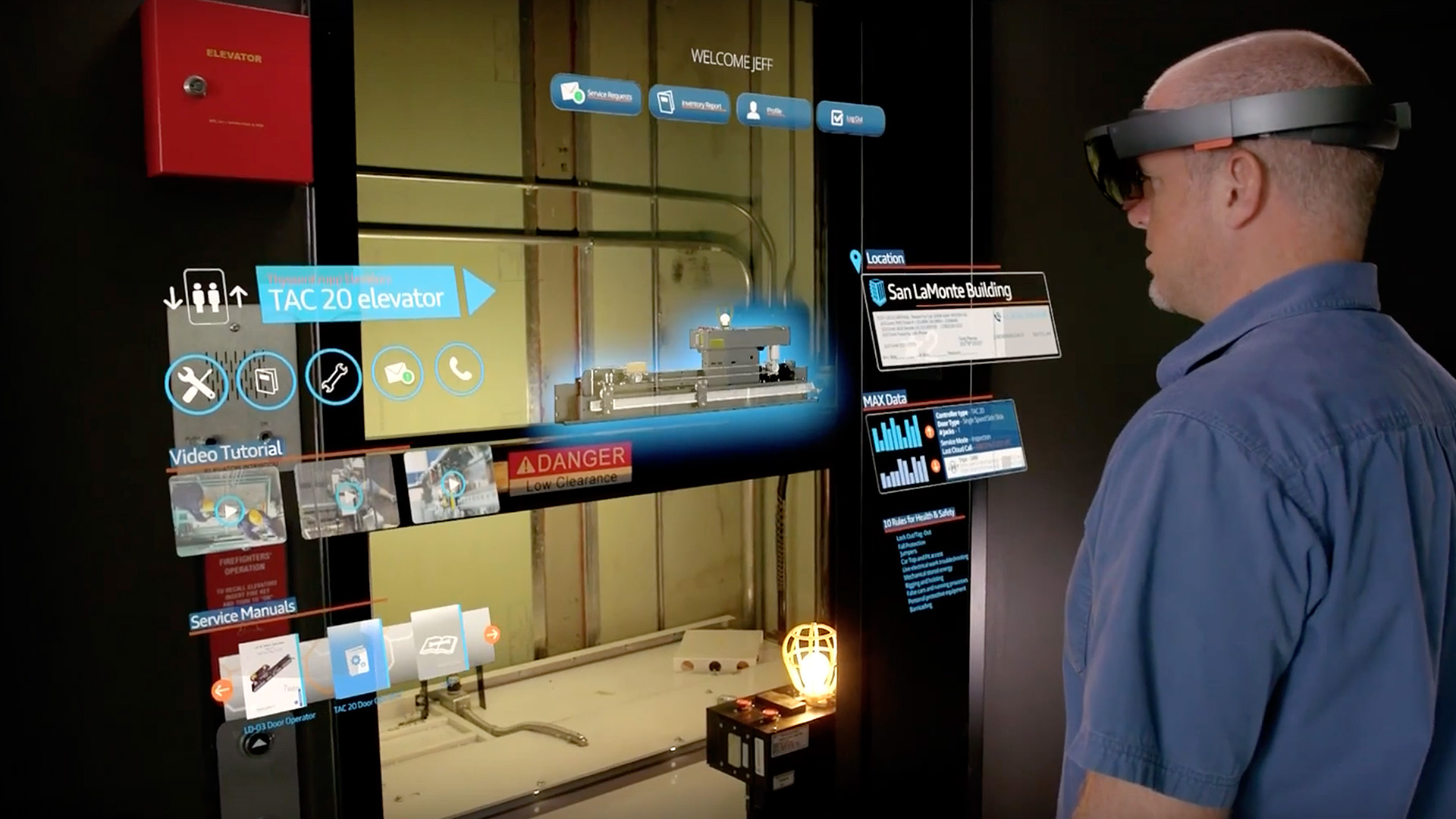
Virtual reality (VR) is a three-dimensional virtual environment that uses a headset or glasses to simulate realistic scenarios in the digital space, enabling learners to practice skills and understand the outcomes of their actions in a simulated environment. Augmented reality (AR), a related technology, enhances reality by overlaying it with digital information using lenses, enabling learners to, for example, see instructions while working on a machine. Both VR and AR are leveraged in training environments to reduce the risk and cost associated with training in certain environments, particularly in medical and compliance training.
What Is AR?
Essentially, AR is an extended reality technology (XR), which is an umbrella term we use for technology that:
- Adds to reality, or
- Allows for the creation of an entirely new reality.
AR allows you to superimpose text, images, video, and even 3D models onto the world. In other words, AR adds to — or augments — reality. Two popular examples include Snapchat filters (think dog ears appearing on your face) and Pokémon Go (where gamers use their phone or tablet to catch Pokémon that seemingly appear in front of them).
There are three types of AR:
- Image Target — video, text, images, or 3D objects overlay a real-world 2D image
- Object Recognition — a digital 3D model is fixed to a real-world 3D object that can pick up and move the digital 3D model around
- Plane Detection — a digital 3D model is fixed to a real-world flat surface that is typically stationary, so you have to move around it
What is VR?
Now we come to VR training, which accounts for the second manifestation of XR (extended reality technology). VR allows you to place learners in an entirely new reality. By way of headset, learners enter a world that’s:
- Loaded with pre-recorded video, or
- 100% simulated.
Either way, VR training is a more thoroughly immersive technology than AR, as it takes away your view of the real world and any distractions in it. Even AR headsets or glasses leave a view of the real world intact. This is a significant difference to call out right away since it’s relevant when considering how each XR solution can be applied to training (remember, the whole environment is important for something like soft skills training).
We’ll consider examples of VR training soon, but first, let’s explain the two types of VR:
- 360° Video — Uses an environment made of recorded video shot with an omnidirectional camera, providing a 360° view
- Full VR — Uses a fully simulated environment
Though there are stylistic differences between the two solutions (namely, real-world footage vs. simulated environment), the central difference is a technical one — and it has major training implications. That difference relates to a concept called Degrees of Freedom.